
Logan Roth · 19 September 2026
The Dynamics of Community Building in Standalone Web Projects
Standalone web projects operate outside major platform ecosystems, and their community dynamics hinge on deliberate design choices that foster repeated user interaction over time. Observers note that these sites often begin with a core set of features such as comment sections, user profiles, and notification systems that encourage return visits, while data from multiple studies shows participation rates climb when initial onboarding flows reduce friction for new arrivals.
Foundational Structures for Interaction
Researchers have documented how clear contribution guidelines and visible activity feeds help establish norms early, which in turn supports sustained engagement across independent sites. Studies indicate that projects incorporating threaded discussions and reaction mechanisms see higher retention compared to those relying solely on static content pages, and figures from the Pew Research Center reveal patterns of recurring visits tied directly to responsive moderation tools. Site operators frequently integrate lightweight forum modules or embeddable chat functions that operate within the project's own domain, thereby maintaining data control while allowing real-time exchanges.
Tools and Integration Patterns
Many standalone projects adopt open-source components for user management, and these choices influence how quickly groups form around shared interests. Evidence suggests that combining RSS feeds with activity logs creates transparency that encourages members to follow ongoing conversations without leaving the site, whereas reliance on external social buttons can dilute traffic back to the primary domain. In September 2026, reports highlighted increased use of federated identity options that let users participate across multiple independent projects using a single credential, which streamlines entry points while preserving project autonomy.
Moderation systems represent another critical layer, with automated filters handling routine tasks and human oversight addressing edge cases that algorithms miss. Data shows that transparent appeal processes correlate with lower churn rates, and projects that publish moderation logs build trust among active contributors. Those who've examined growth trajectories across dozens of sites find that consistent rule enforcement, paired with recognition features such as badges or featured posts, sustains momentum beyond the initial launch phase.
Growth Trajectories and Measurement
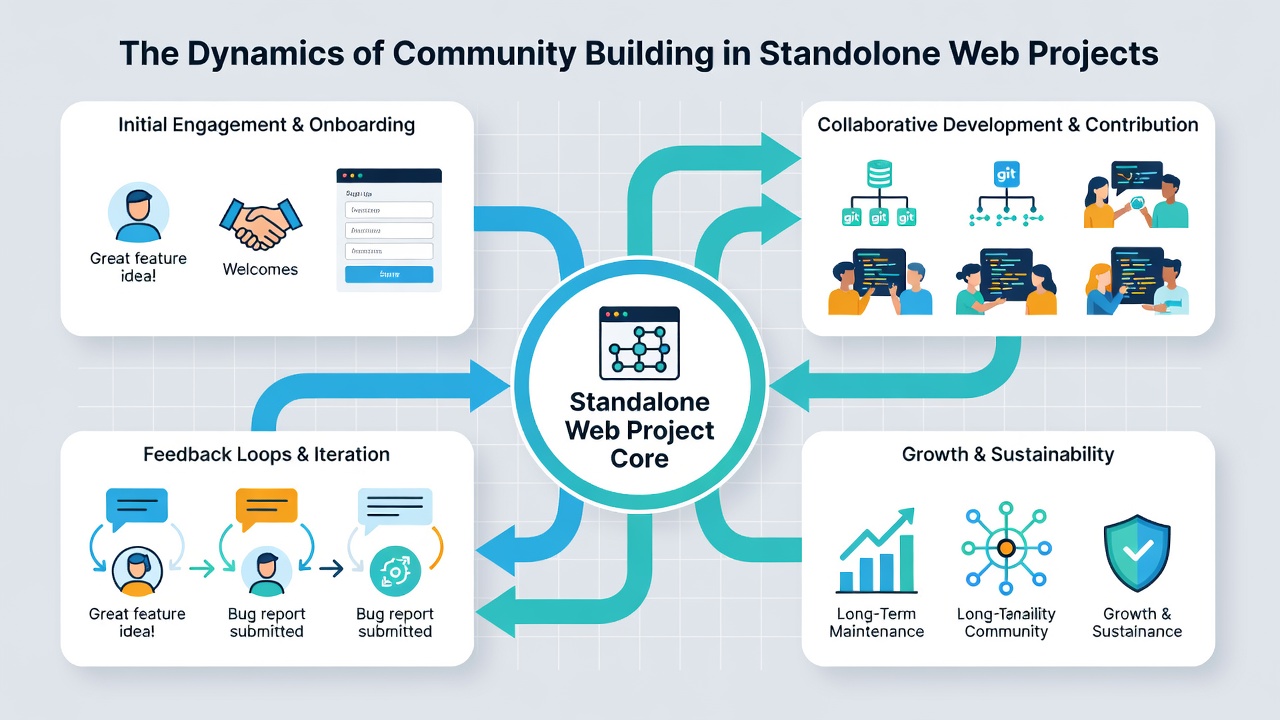
Longitudinal observations demonstrate that communities expand most reliably through iterative feature releases that respond to expressed member needs rather than top-down mandates. Metrics tracked by project teams often include daily active users, comment depth, and referral sources internal to the site, while external benchmarks from the European Commission's Joint Research Centre provide context on broader digital participation trends across regions. Successful examples include projects that introduced collaborative editing tools after user requests, resulting in measurable upticks in content contributions and cross-member collaborations.
Challenges arise when scale increases without corresponding infrastructure adjustments, such as database optimizations for larger comment volumes or rate limiting to prevent spam. Analysts point out that early detection of these pressure points allows teams to implement solutions before participation drops, and comparative data from various independent projects illustrates how proactive scaling maintains the interactive quality that initially attracted members.
Regional Variations in Practice
Approaches differ by geographic focus, with projects in North America emphasizing rapid feedback loops and those in Europe often prioritizing privacy-compliant data practices from the outset. Australian research initiatives have tracked how localized content themes strengthen retention in regional standalone sites, while Canadian digital reports note the role of bilingual interfaces in broadening participation. These variations underscore that community dynamics adapt to cultural and regulatory contexts without a single universal template.
Conclusion
Community building in standalone web projects rests on interconnected decisions around structure, tools, moderation, and measurement that evolve with user input and external conditions. Ongoing documentation of these patterns continues to inform new projects seeking durable engagement models, and the interplay between technical implementation and human interaction remains central to outcomes observed across diverse implementations.