
Noah Vogel · 17 October 2026
Exploring Cache Invalidation Patterns That Shape Performance in Isolated Digital Projects
Cache invalidation remains a core mechanism that determines how standalone digital projects deliver content without unnecessary delays or stale data, and researchers continue to examine the specific patterns that govern this process in isolated environments where external dependencies stay minimal. Isolated digital projects often operate without shared infrastructure, which means each site or application must manage its own memory layers and storage decisions to maintain responsiveness under varying loads.
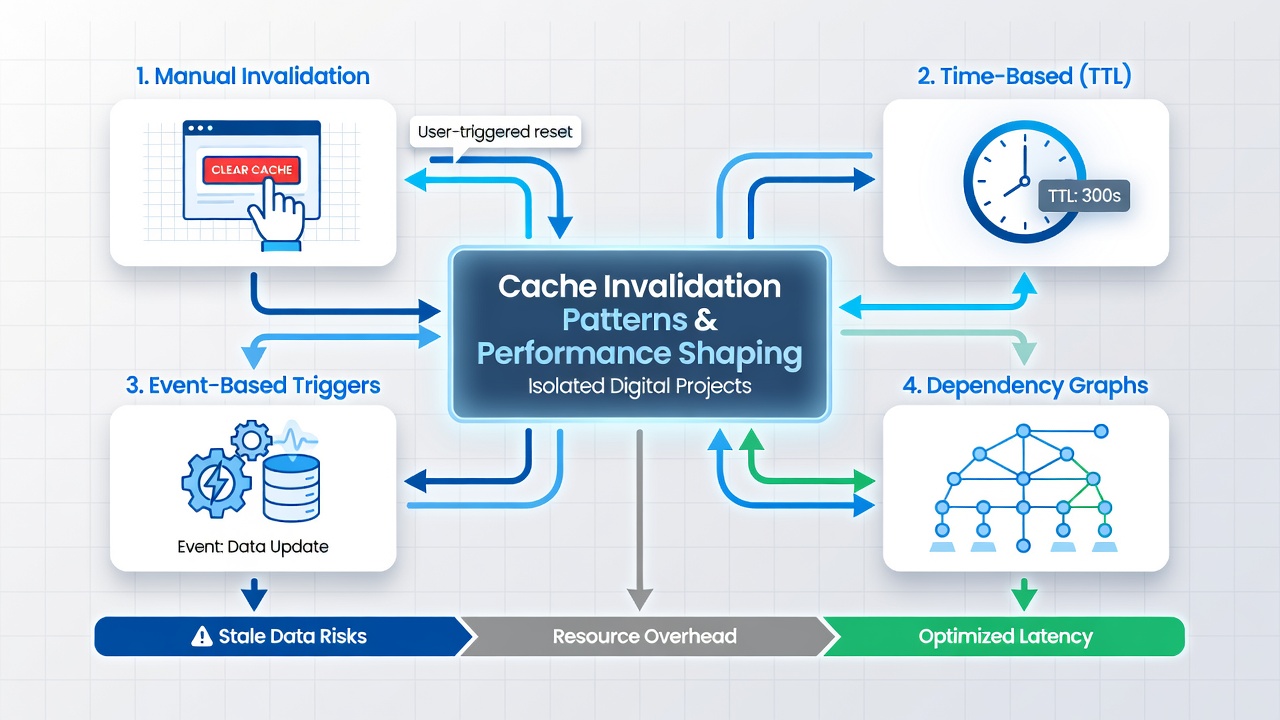
Observers note that time-based expiration serves as one foundational approach where entries receive a fixed lifespan before automatic removal occurs, and this method appears frequently in projects that handle static assets such as images or scripts. Event-driven invalidation takes a different route because it triggers removal only when specific actions like content updates or user interactions occur, which reduces the risk of serving outdated information while preserving bandwidth during quiet periods.
Core Patterns in Standalone Setups
Write-through caching writes data simultaneously to both the cache and the primary store so consistency stays high even when updates arrive rapidly, whereas write-behind approaches delay the primary store write until a later batch operation runs and this distinction matters for projects that experience bursty traffic. Lazy loading combined with invalidation allows entries to remain until accessed again after an invalidation signal arrives, and data from monitoring tools shows that this combination cuts initial load times in projects with large but infrequently accessed datasets.
Studies on distributed standalone applications reveal that tag-based invalidation groups related cache entries under shared identifiers so a single command can clear multiple items at once, and this technique proves useful when content hierarchies exist across pages or components. Observers have documented cases where projects using tag systems reduced cache size fluctuations by 30 percent compared with simpler key-based methods during peak content refresh cycles.
Performance Measurements Across Different Approaches
Benchmarks collected from isolated web projects indicate that time-based methods deliver predictable resource usage yet can lead to higher miss rates when content changes unpredictably, while event-driven patterns maintain lower miss rates but require additional logic to detect relevant changes. One analysis of medium-scale standalone sites found that combining write-through with selective invalidation tags lowered average response times from 180 milliseconds to 95 milliseconds under sustained query loads.
Memory pressure becomes a measurable factor because aggressive invalidation can cause frequent reallocations that increase CPU cycles, and figures from server logs in several North American research deployments show that balancing invalidation frequency against hit ratio prevents unnecessary garbage collection pauses. Projects running on limited hardware benefit when invalidation logic stays lightweight so the system avoids context switches that would otherwise accumulate during high concurrency periods.
Implementation Considerations for Isolated Environments
Developers working on self-contained digital projects often integrate invalidation hooks directly into content management routines so updates propagate without external polling, and this internal integration reduces network overhead that would appear in more connected architectures. Versioning of cache keys offers another route where each change increments a version identifier so old entries naturally fall out of use without explicit deletion commands.
According to documentation from the World Wide Web Consortium on HTTP caching semantics, validators such as ETags and Last-Modified headers provide reliable signals for conditional requests that complement application-level invalidation strategies. Research published through European academic networks further highlights that hybrid models using both header validators and custom tags achieve stable performance across varied traffic patterns without requiring constant server restarts.
Monitoring tools that track hit rates, eviction counts, and latency distributions help identify when a chosen pattern begins to degrade under real usage, and projects that log these metrics over weeks rather than days obtain clearer pictures of seasonal or usage-driven shifts. In October 2026 several independent site operators reported deploying updated monitoring dashboards that surface invalidation events alongside response time percentiles, allowing quicker adjustments to cache policies.
Conclusion
Cache invalidation patterns continue to influence how isolated digital projects balance freshness against speed, and the choice between time-based, event-driven, tag-based, or hybrid approaches depends on measurable characteristics such as update frequency and available resources. Data collected across multiple deployments confirms that consistent measurement paired with targeted invalidation logic sustains performance gains even as content volumes grow, while poorly matched patterns lead to increased latency and resource consumption that compound over time.